Introduction
The tech industry has been rocked by one of the most explosive legal battles of 2025. Apple has officially filed a massive lawsuit against OpenAI, alleging systematic theft of trade secrets. According to court documents, Apple claims that OpenAI didn't just aggressively recruit its top machine learning and silicon engineers; they allegedly "mentored" these incoming employees on how to covertly exfiltrate highly confidential data, proprietary source code, and hardware design secrets before handing in their resignations.
As these industry titans prepare for a multi-billion-dollar courtroom war, the implications for the broader tech landscape are profound. For developers, researchers, and technology enthusiasts, this lawsuit highlights a major vulnerability: relying entirely on closed-source, proprietary cloud AI models leaves you at the mercy of corporate litigation, sudden service disruptions, and shifting privacy policies.
The alternative? Taking control of your data and workflows by running powerful open-source Large Language Models (LLMs) locally. Today, we will break down the Apple vs. OpenAI lawsuit and guide you through the best PC hardware to build a local AI powerhouse in 2025.
---
The Bombshell Lawsuit: Apple Takes on OpenAI
For years, Apple has quietly built up its consumer-facing AI capabilities, focusing heavily on on-device processing via its Apple Silicon Neural Engine. However, the rapid rise of OpenAI's generative models forced Apple to accelerate its plans, culminating in partnerships and deep system integration. Behind the scenes, a bitter rivalry was brewing.
In its legal filing, Apple claims that OpenAI engaged in a coordinated campaign to siphon off Apple’s proprietary intellectual property. The most damning allegation is that OpenAI managers actively instructed transitioning Apple employees on how to bypass Apple's internal security protocols. This allegedly included downloading confidential machine learning training methodologies, specialized silicon architecture designs, and proprietary optimization techniques for running complex models on consumer-grade hardware.
OpenAI has denied the allegations, stating that its technological advancements are the result of independent research and development. However, the legal discovery process could expose sensitive details about how both companies train, optimize, and run their state-of-the-art AI systems.
---
Why This Corporate Drama Matters for PC Hardware
If Apple's lawsuit proves anything, it is that the "secret sauce" of AI is increasingly focused on efficiency—specifically, how to run massive models on local, consumer-grade hardware without relying on massive, power-hungry cloud data centers.
With open-source models like Meta’s Llama 3, Mistral, and DeepSeek matching or exceeding the capabilities of proprietary models for many tasks, the demand for local AI execution has skyrocketed. Running AI locally offers several key advantages:
* Absolute Privacy: Your prompts, data, and code never leave your machine. * Zero Latency: No waiting for cloud queues or API rate limits. * No Subscription Fees: Once you own the hardware, running the models is virtually free. * Customizability: You can fine-tune models on your own datasets without worrying about licensing issues.
To run these models effectively, however, you cannot rely on standard office PCs. You need specialized PC hardware designed to handle massive computational loads and high memory bandwidth.
---
Building the Ultimate Local AI Workstation in 2025
When building a PC for local AI, your priorities differ significantly from a standard gaming PC. While gaming relies heavily on raw rasterization performance and single-core CPU speeds, local AI inference and training depend on three critical factors: VRAM capacity and bandwidth, system memory capacity, and multi-threaded CPU performance.
Here are our top hardware recommendations to build an elite local AI workstation in 2025.
1. The GPU: VRAM is King
The single most important component for local AI is the Graphics Processing Unit (GPU). AI models are loaded directly into the GPU’s Video RAM (VRAM). If a model is too large for your VRAM, it will spill over into your much slower system RAM, causing performance to crater.
* ASUS ROG Strix GeForce RTX 4090 (24GB VRAM) Approximate Price:* $1,999 Why it’s essential:* For serious local AI work, the NVIDIA RTX 4090 remains the undisputed gold standard. With 24GB of ultra-fast GDDR6X VRAM and 16,384 CUDA cores alongside specialized Tensor Cores, this card can run quantized 70B parameter models at impressive tokens-per-second rates. NVIDIA's CUDA ecosystem also remains the industry standard, ensuring seamless compatibility with PyTorch, TensorFlow, and Hugging Face libraries.
* MSI Ventus 3X GeForce RTX 4070 Ti Super (16GB VRAM) Approximate Price:* $799 Why it’s essential:* If a $2,000 GPU is out of reach, the RTX 4070 Ti Super is the best price-to-performance entry point for local AI. Unlike the standard 4070, the "Ti Super" variant features a wider 256-bit memory bus and 16GB of VRAM. This allows you to comfortably run 13B and 34B parameter models with high quantization levels, making it a fantastic budget workstation card.
2. The Processor: Multi-Threaded Power
While the GPU does the heavy lifting for model inference, the CPU is responsible for data preprocessing, tokenization, and managing system pipelines.
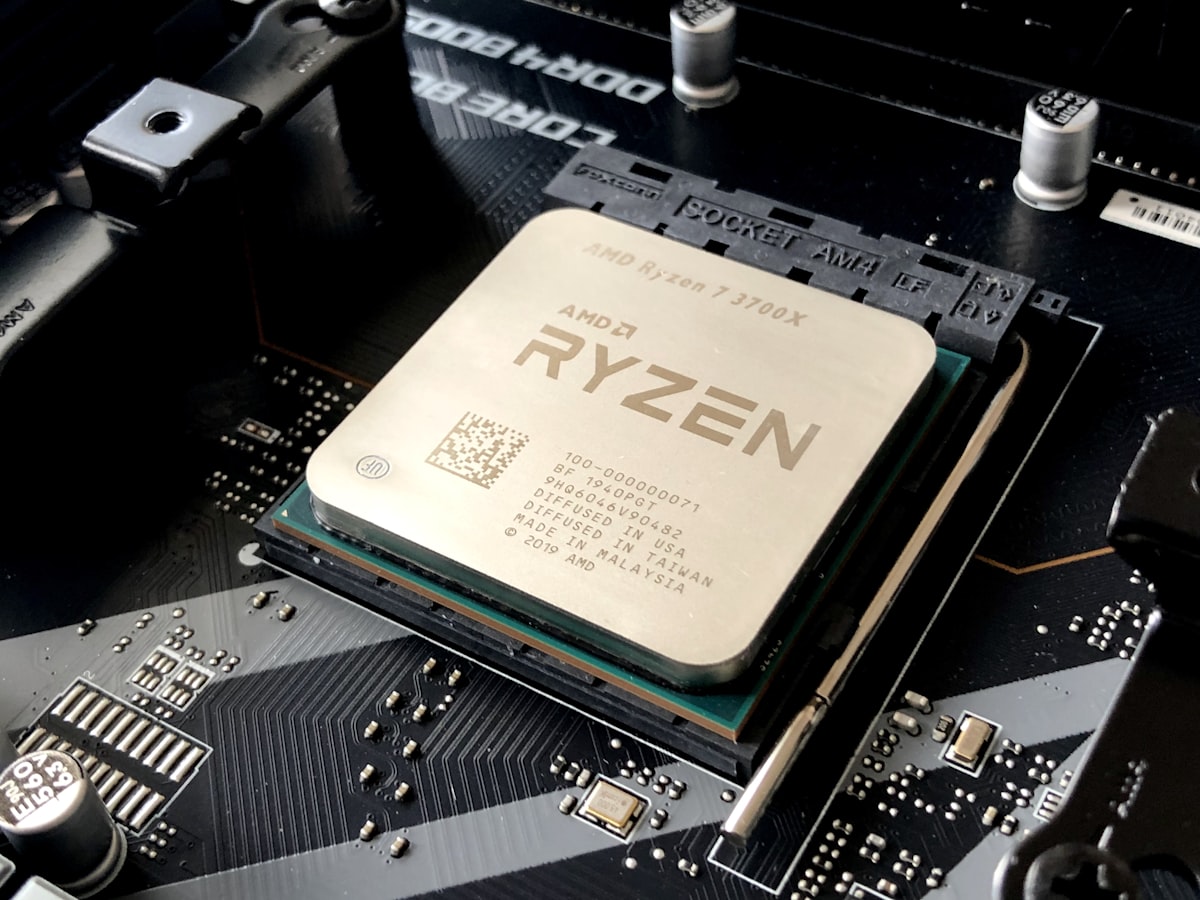
* AMD Ryzen 9 9950X Approximate Price:* $649 Why it’s essential:* Sporting 16 cores and 32 threads built on AMD's latest Zen 5 architecture, the Ryzen 9 9950X is a multi-threaded monster. It excels at compiling code, processing massive datasets, and running local CPU-based model inference when experimenting with architectures that exceed your GPU’s VRAM capacity.
3. System RAM: Capacity and Speed
When working with large datasets or running multiple local models simultaneously, standard system memory can quickly become a bottleneck. You want high-capacity, high-speed DDR5 RAM.
* Corsair Vengeance DDR5 64GB (2x32GB) 6000MHz CL30 Approximate Price:* $210 Why it’s essential:* 64GB is the sweet spot for an AI developer workstation. This kit offers low latency (CL30) and high speeds, allowing your CPU to feed data to your GPU as fast as possible. If you plan on running massive 100B+ parameter models on your CPU, you can easily double this kit to 128GB.
4. Storage: High-Speed NVMe SSDs
AI models are massive files, often ranging from 10GB to over 100GB. Loading these models into memory from a slow drive can take several minutes.
* Samsung 990 Pro 2TB NVMe M.2 SSD Approximate Price:* $170 Why it’s essential:* With read speeds up to 7,450 MB/s, the Samsung 990 Pro ensures that even the largest AI models load into your GPU's VRAM in a matter of seconds. It also provides the endurance required for heavy read/write cycles during dataset preparation.
---
Bottom Line: Our Verdict
The legal warfare between Apple and OpenAI in 2025 serves as a wake-up call for the entire tech industry. Relying on centralized, corporate-controlled AI ecosystems is a gamble. By investing in high-performance local hardware, you insulate yourself from corporate legal drama, protect your intellectual property, and gain the freedom to experiment without limits.
If you have the budget, building a workstation around the NVIDIA GeForce RTX 4090 and the AMD Ryzen 9 9950X will give you a desktop supercomputer capable of running cutting-edge open-source models locally for years to come. For those on a budget, pairing the RTX 4070 Ti Super (16GB) with a high-capacity RAM kit offers an incredibly capable entry point into the exciting world of local, private AI.