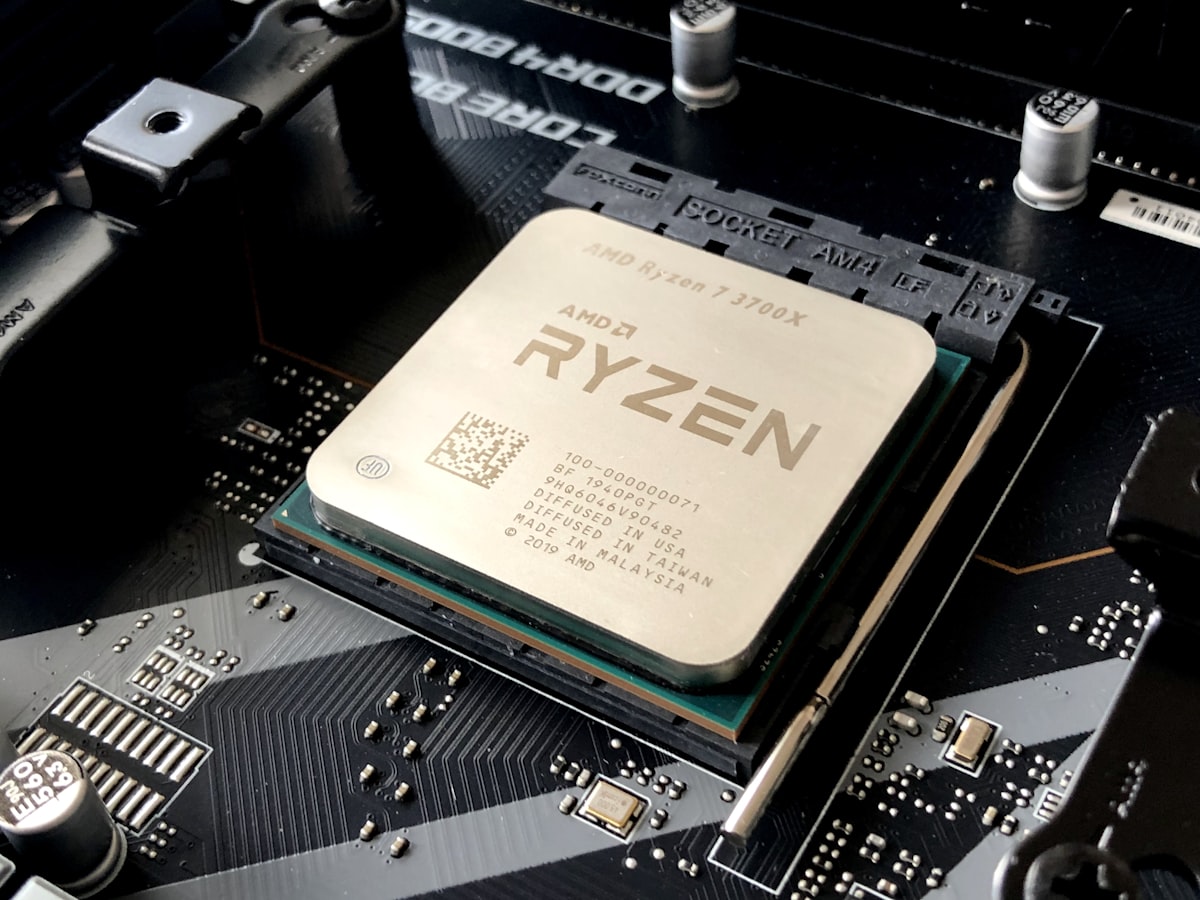
Introduction: The Edge AI Power Dilemma
As we march through 2025, the demand for local, on-device artificial intelligence has reached a fever pitch. From smart home hubs and wearable health monitors to autonomous drones and advanced automotive systems, we want our devices to "think" instantly without relying on latency-heavy cloud servers. However, running complex neural networks on tiny, battery-powered devices presents a massive hurdle: power consumption.
Enter memory giant SK hynix and startup TetraMem. The two companies have recently collaborated on an experimental System-on-Chip (SoC) designed to shatter the traditional energy boundaries of edge AI. Utilizing cutting-edge memristor-based in-memory computing (IMC), this prototype aims to process AI workloads directly within the memory array itself.
While the energy efficiency claims are staggering, the research leaves several critical performance and scalability questions up in the air. Let's dive deep into what this technology is, why it matters, and whether it represents the future of consumer PC and edge hardware.
---
Breaking the Von Neumann Bottleneck with Memristors
To understand why the SK hynix and TetraMem collaboration is such a big deal, we have to look at how modern computers work. For decades, PCs and mobile devices have relied on the Von Neumann architecture, where the processor (CPU/GPU) and the memory (RAM/storage) are kept separate.
Every time an AI model performs a calculation, data must travel back and forth between the processor and the memory. This constant shuttle service is known as the "memory wall." It accounts for up to 90% of the energy consumed during AI inference workloads.
What is a Memristor?
A memristor (short for "memory resistor") is a passive electronic component that can remember its electrical resistance even after power is turned off. By using memristors in an analog crossbar array, the SK hynix and TetraMem chip can perform Multiply-Accumulate (MAC) operations—the mathematical foundation of neural networks—directly where the data is stored.
Because there is no need to move data back and forth, energy consumption drops exponentially. It is analog computing reborn for the AI era.
---
The Promise: Unprecedented Energy Efficiency
According to the preliminary research data, this experimental memristor-based SoC achieves energy efficiency figures that make traditional silicon accelerators look incredibly wasteful. For edge devices that must operate on milliwatts of power, this technology could enable:
* Always-on voice and image recognition without draining smart watch batteries. * Real-time sensor fusion in autonomous vehicles with zero latency. * Advanced medical wearables that can detect cardiac anomalies locally in real-time.
By leveraging TetraMem's proprietary memristor design and SK hynix's manufacturing expertise, the team has managed to build a multi-level cell (MLC) architecture. This allows each memristor to store multiple bits of data, significantly increasing density.
---
The Catch: Performance Questions Left Up in the Air
While the efficiency metrics are highly encouraging, industry analysts are urging caution. The research paper leaves several critical questions unanswered, particularly regarding raw performance and real-world viability:
1. Analog Noise and Accuracy: Unlike digital systems, which deal in absolute 1s and 0s, analog in-memory computing deals with varying electrical currents. This introduces "noise" and can degrade the accuracy of AI models. How does this chip handle high-precision calculations? 2. Scalability: While the prototype works beautifully for small, specialized AI models, can it scale to handle modern LLMs (Large Language Models) or complex computer vision tasks? 3. Manufacturing Yields: Memristors are notoriously difficult to manufacture reliably at scale. Even a minor defect in the array can ruin the calculations of a neural network.
Until SK hynix and TetraMem provide benchmark data comparing their SoC to existing digital NPUs (Neural Processing Units) under real-world workloads, this remains an exciting, but highly experimental, laboratory breakthrough.
---
What You Can Buy Today for High-Performance AI and Memory
While we wait for memristors to make their way into commercial PC hardware, you don't have to wait to build a high-performance system capable of tackling local AI workloads today. High-speed DRAM, ultra-fast SSD storage, and dedicated NPUs are already widely available.
Here are some of our top product recommendations for optimizing your PC's memory and AI processing capabilities in 2025:
1. SK hynix Platinum P41 2TB PCIe Gen4 NVMe SSD
* Approximate Price: $155 * Why it's great: If you want to experience SK hynix’s world-class memory engineering today, the Platinum P41 is one of the fastest PCIe Gen4 drives on the market. Boasting read speeds up to 7,000 MB/s, it ensures that massive AI datasets and local LLMs load into your system memory instantly, minimizing bottlenecks.2. Corsair Dominator Titanium DDR5 64GB (2x32GB) 6000MHz CL30
* Approximate Price: $225 * Why it's great: Local AI generation (like Stable Diffusion or local LLaMA models) is incredibly memory-hungry. This premium DDR5 kit from Corsair offers massive capacity and ultra-low latency, ensuring your CPU or GPU has a steady, high-bandwidth stream of data to work with.3. Minisforum UM890 Pro Mini PC (AMD Ryzen 9 8945HS)
* Approximate Price: $550 (Barebone) * Why it's great: If you want to experiment with dedicated edge AI hardware today, this mini PC features AMD's Ryzen AI NPU (Ryzen 8000 series). While it's not a memristor chip, its dedicated XDNA NPU offers excellent energy-efficient AI processing for local developers.4. Google Coral USB Accelerator
* Approximate Price: $60 * Why it's great: Want to add energy-efficient edge AI to a Raspberry Pi or low-power PC right now? The Google Coral USB Accelerator uses an Edge TPU coprocessor to deliver high-speed ML inferencing for low-power devices, serving as a spiritual predecessor to what the SK hynix/TetraMem chip hopes to achieve at a larger scale.---
Bottom Line / Our Verdict
The collaboration between SK hynix and TetraMem on this experimental memristor-based SoC is a fascinating glimpse into the future of computing. By merging memory and processing, they have targeted the single biggest bottleneck in modern computer architecture.
However, for now, this technology remains firmly in the research phase. The lack of concrete performance benchmarks and the inherent challenges of analog computing mean we are likely years away from seeing memristor-based hardware in consumer PCs or mobile devices.
Our Verdict: Keep a close eye on this research, but don't hold your breath for a consumer release anytime soon. For 2025, traditional ultra-fast DDR5 RAM, high-speed NVMe SSDs, and dedicated silicon NPUs remain the undisputed kings of local AI processing.