Introduction
Undersea critical infrastructure has become one of the most significant geopolitical vulnerability points of the decade. Following several high-profile incidents of mysterious cable cuttings in the Baltic Sea, Finland has taken a decisive step forward. The nation is deploying a cutting-edge defense system utilizing Distributed Acoustic Sensing (DAS). By sending laser pulses down existing dark fiber-optic cables, DAS transforms thousands of miles of undersea glass into an incredibly sensitive, continuous microphone.
This system can detect minute vibrations on the seabed, ranging from passing submarines and surface vessels to anchor drags and manual tampering. However, translating thousands of kilometers of real-time acoustic backscatter into actionable intelligence is a monumental computational challenge. It requires massive, localized data-processing pipelines.
In this article, we look at the incredible PC hardware and high-performance workstation components required to handle the immense processing, AI pattern recognition, and storage demands of Finland’s new undersea defense network in 2025.
The Computational Challenge of Distributed Acoustic Sensing
DAS works by sending coherent pulses of light down a fiber-optic cable and measuring the tiny changes in the backscattered light caused by physical vibrations. Because the system measures these changes at kilohertz sampling rates across every single meter of a cable, it generates an absolutely staggering amount of raw data—often multiple gigabytes per second, per cable.
To make this data useful, edge computing nodes stationed at cable landing points must perform three critical tasks in real-time: 1. Digital Signal Processing (DSP): Filtering out background ocean noise, such as waves, marine life, and commercial shipping lanes. 2. AI Pattern Matching: Running machine learning models to identify suspicious patterns (like a slow-moving vessel hovering over a cable or a diver at depth). 3. High-Speed Ingestion: Writing raw and processed telemetry to ultra-fast storage arrays for forensic analysis.
To build a system capable of handling this workload without dropping packets, authorities and operators are turning to high-end desktop (HEDT) and enterprise-grade PC hardware.
Building the Ultimate Edge Node: Top Hardware Recommendations
Processing ocean-scale acoustics requires more than just standard office PCs. It demands massive multi-threaded performance, high PCIe lane counts for expansion, and rapid storage throughput. Here are our top hardware recommendations for building a localized data-processing powerhouse in 2025.
1. The Processing Core: AMD Ryzen Threadripper 7960X
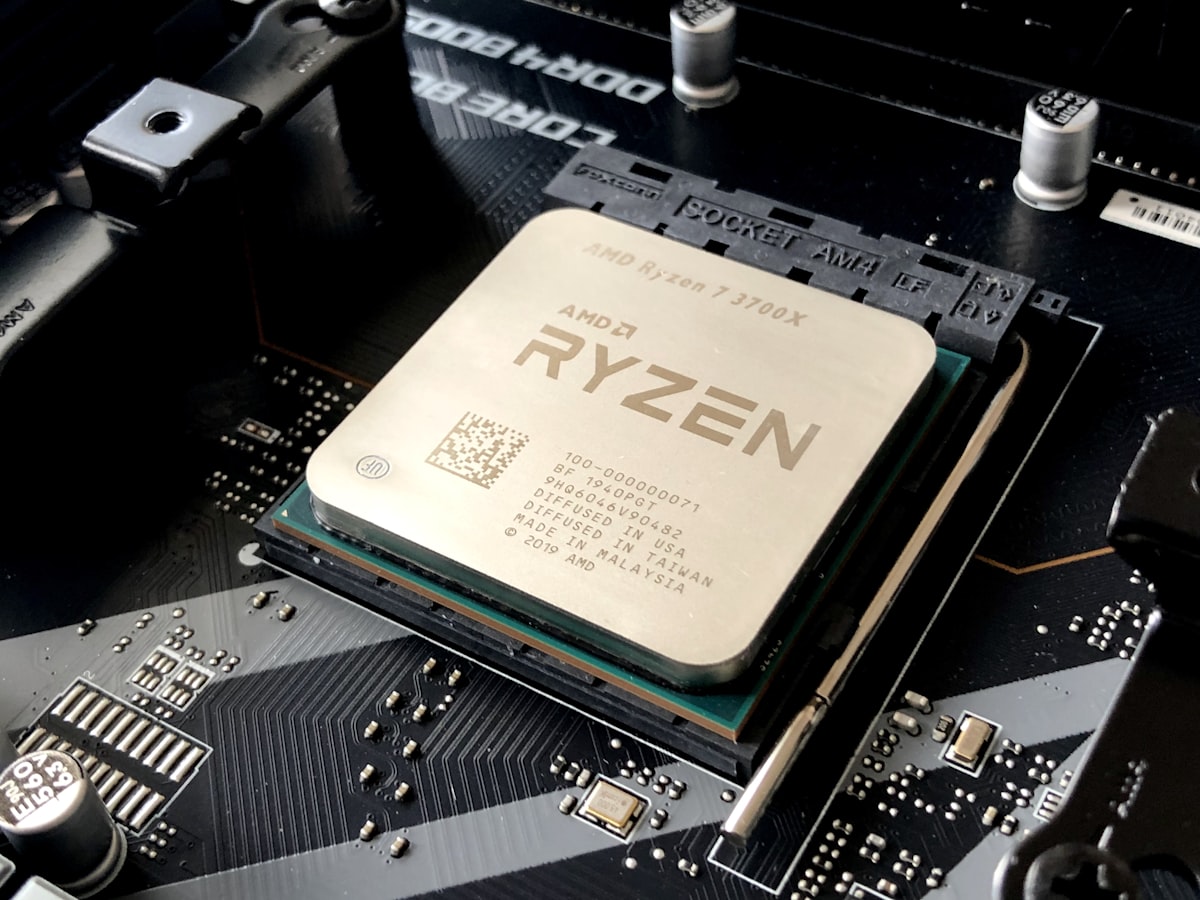
* Approximate Price: $1,499For heavy-duty digital signal processing, standard consumer CPUs simply run out of steam. The AMD Ryzen Threadripper 7960X is a 24-core, 48-thread beast built on the Zen 4 architecture. Its massive core count allows it to run multiple parallel DSP pipelines simultaneously, processing different segments of the undersea cable in dedicated threads. Furthermore, it supports 128 PCIe Gen 5 lanes, allowing operators to connect multiple high-speed network interface cards (NICs) and AI accelerators without encountering bandwidth bottlenecks.
2. The Foundation: ASUS Pro WS TRX50-SAGE WIFI Motherboard
* Approximate Price: $899To support a high-end Threadripper processor and ensure 24/7 reliability, a workstation-grade motherboard is non-negotiable. The ASUS Pro WS TRX50-SAGE WIFI is designed specifically for relentless, high-load scenarios. It features robust VRM cooling, active heatsinks, and support for ECC (Error-Correcting Code) DDR5 memory. ECC RAM is crucial for national security applications, as it automatically detects and corrects single-bit memory errors, preventing system crashes during critical monitoring windows.
3. The AI Engine: NVIDIA GeForce RTX 4090
* Approximate Price: $1,599While CPUs handle the initial signal filtering, identifying the difference between an anchor drag and a whale song requires deep learning. The NVIDIA GeForce RTX 4090 remains the undisputed king of localized AI computation. Boasting 24GB of high-speed GDDR6X VRAM and 16,384 CUDA cores, this GPU can run complex acoustic classification models in real-time. By leveraging NVIDIA's TensorRT software suite, operators can run localized AI inference directly at the cable landing station, ensuring alerts are generated within milliseconds of a detected vibration.
4. The Storage Pipeline: Crucial T700 4TB PCIe Gen5 NVMe SSD
* Approximate Price: $450When you are ingesting gigabytes of acoustic data every second, your storage drive cannot afford to be a bottleneck. The Crucial T700 4TB PCIe Gen5 SSD offers blistering read speeds of up to 12,400 MB/s and write speeds of up to 11,800 MB/s. Utilizing a Gen5 interface, it ensures that raw acoustic telemetry can be written to disk continuously without causing system lag. For a fully redundant setup, running several of these drives in a RAID array provides both the speed and the parity needed for mission-critical security operations.
Why Consumer and Workstation Hardware is Leading the Charge
Traditionally, military and national infrastructure projects relied on specialized, proprietary mainframes. However, the rapid evolution of consumer and HEDT PC hardware has shifted the paradigm. Today’s off-the-shelf PC components offer unparalleled performance-per-dollar and can be easily upgraded as AI models evolve.
By leveraging open-source machine learning frameworks on standard Windows or Linux-based workstations, Finnish authorities and utility operators can deploy, patch, and scale their acoustic monitoring networks much faster than they could using closed, proprietary defense systems.
Bottom Line / Our Verdict
Finland’s deployment of Distributed Acoustic Sensing is a masterclass in modern infrastructure defense, proving that the front line of national security is increasingly digital. However, the hardware running behind the scenes is what makes this technology viable.
If you are building a system designed to handle massive data ingestion, real-time AI inference, or heavy computational workloads, the combination of an AMD Ryzen Threadripper 7960X, an ASUS Pro WS TRX50-SAGE motherboard, and an NVIDIA RTX 4090 represents the gold standard of workstation performance in 2025. It is a stark reminder that the very same PC hardware we use for high-end gaming and content creation is also playing a pivotal role in safeguarding the global internet.