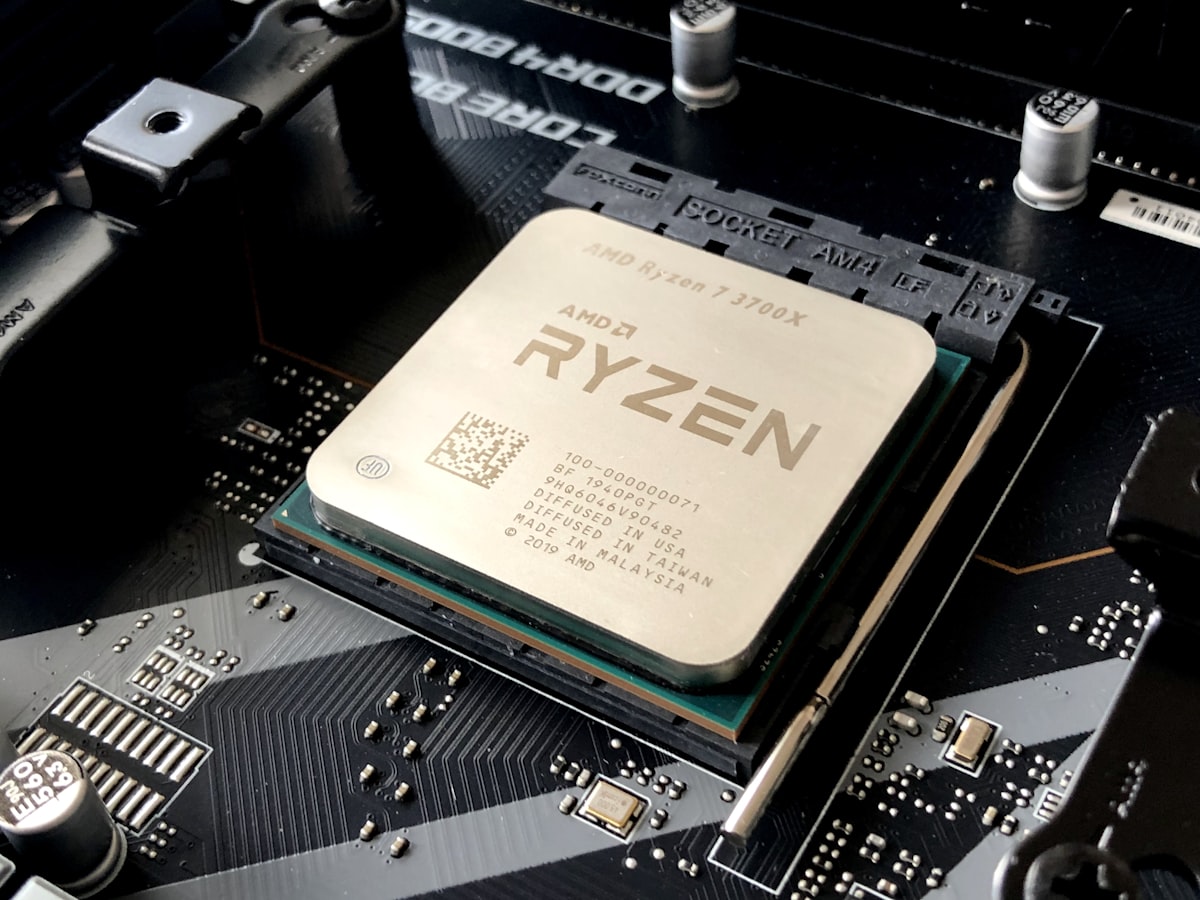
The Great CPU Rebalancing of 2025
The landscape of silicon power has shifted dramatically as we move through 2025. For decades, the story of the x86 processor market was one of Intel’s absolute dominance, with AMD playing the role of the scrappy underdog. However, the latest market data reveals a fascinating divergence: while AMD has captured a staggering 46% of the x86 server revenue, Intel remains the king of the consumer desktop and laptop world, maintaining a robust 70% market share in the client segment.
This division tells us a lot about where the money is moving and where the loyalty lies. Data centers are prioritizing efficiency and core density, favoring AMD’s EPYC lineup, while the average gamer and office worker still reach for the familiar blue sticker of Intel Core processors. Let's dive deep into the numbers and what they mean for your next PC build.
AMD’s Server Conquest: The EPYC Ascendance
Reaching nearly 46% of server revenue is a milestone that few analysts thought possible ten years ago. This isn't just about selling more chips; it’s about selling better chips. AMD’s EPYC architecture has consistently outperformed Intel’s Xeon Scalable processors in terms of Total Cost of Ownership (TCO).
In the enterprise world, every watt of electricity and every rack unit of space counts. By utilizing TSMC’s advanced manufacturing nodes, AMD has been able to pack more cores into a smaller thermal envelope. This has made them the darling of cloud service providers like AWS, Azure, and Google Cloud. While Intel still ships a massive volume of server chips, they are often forced to compete on price or legacy compatibility, whereas AMD is capturing the high-margin, high-performance AI and cloud workloads.
Why Intel Still Owns Your Desktop
Despite AMD's technical achievements, Intel’s 70% share of the consumer market is a testament to the power of branding, OEM partnerships, and a massive supply chain. If you walk into a Best Buy or browse Dell’s website today, the majority of pre-built systems—especially laptops—are powered by Intel.
Intel’s "Arrow Lake" (Core Ultra Series 2) and the preceding 14th Gen Raptor Lake Refresh have maintained a strong foothold by offering excellent single-core performance, which is still the primary metric for many daily tasks and older gaming engines. Furthermore, Intel’s QuickSync technology remains a gold standard for video editors, keeping the creative professional market firmly in the blue camp.
The Gaming Landscape in 2025: X3D vs. Core Ultra
For gamers, the choice has never been more difficult—or more exciting. AMD’s 3D V-Cache technology, found in the Ryzen 7000 and 9000 series, has effectively neutralized Intel’s traditional gaming lead. By stacking L3 cache vertically on the processor, AMD has eliminated many of the latency bottlenecks that plague modern open-world games.
Intel has responded with the Core Ultra series, focusing on a more modular "tile" design that emphasizes efficiency and integrated AI processing (NPUs). While Intel may not hold the absolute gaming crown in every title, their chips offer a balanced profile that handles multi-tasking, streaming, and productivity with remarkable stability.
Top CPU Recommendations for 2025
Whether you are building a new rig or upgrading an existing one, here are the standout processors currently dominating the market:
1. The Gaming King: AMD Ryzen 7 7800X3D
Despite being a generation old, the 7800X3D remains the gold standard for pure gaming performance. Its massive L3 cache allows for incredibly high 1% low frame rates, making gameplay feel smoother than on almost any other chip. Approximate Price: $380 - $4202. The Productivity Workhorse: Intel Core i7-14700K
With a generous mix of Performance-cores and Efficient-cores, the 14700K is a monster for multi-threaded workloads like rendering, code compilation, and heavy multitasking. It bridges the gap between mid-range and enthusiast perfectly. Approximate Price: $360 - $3903. The Best Value All-Rounder: AMD Ryzen 5 7600
For those on a budget who want to get onto the AM5 platform (which AMD promises to support for years), the Ryzen 5 7600 is unbeatable. It’s cool, efficient, and comes with a decent stock cooler. Approximate Price: $190 - $2104. The New Architecture Play: Intel Core Ultra 7 265K
Intel’s latest foray into the "Core Ultra" branding for desktop, this chip offers the newest architecture with a focus on lower power consumption and dedicated AI hardware. It’s the choice for those who want the latest tech and a quieter, cooler-running system. Approximate Price: $390 - $410The Impact of AI on Your Next CPU
In 2025, we cannot talk about CPUs without mentioning AI. Both AMD and Intel are now integrating Neural Processing Units (NPUs) directly into their consumer silicon. While we are still in the early days of software support, these NPUs are designed to handle tasks like background blur in video calls, local LLM (Large Language Model) processing, and AI-driven photo editing without taxing your GPU or main CPU cores. Intel’s 70% market share gives them a massive advantage here, as software developers are more likely to optimize their AI tools for Intel’s NPU architecture first.
The Bottom Line: Our Verdict
The current state of the market is a win for the consumer. AMD’s dominance in the server sector (46% revenue share) provides them with the R&D budget to keep pushing the boundaries of what is possible with Ryzen. Meanwhile, Intel’s 70% grip on the consumer market has forced them to innovate faster than they have in a decade, moving away from monolithic designs to more efficient, tile-based architectures.
Our Verdict: If you are building a dedicated gaming PC in 2025, AMD’s X3D series is still the champion of the enthusiasts. However, if you are looking for a high-end laptop or a versatile pre-built workstation for office and creative use, Intel’s Core Ultra lineup remains the most reliable and widely supported choice. The 'CPU Wars' are no longer about one company winning; they are about which company's specific strengths align with your specific needs.